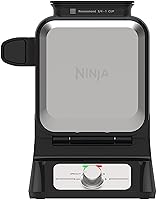
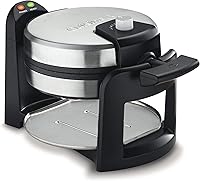
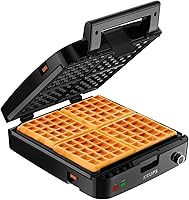
Why Do Belgian Waffle Makers Flip Over?
Belgian waffle makers flip to spread batter across the plates before it sets, helping fill the deeper grid more evenly. The turn also changes how gravity acts on the batter, but it doesn't replace proper batter amounts or cooking time.
On this page (8 sections)
- Why do Belgian waffle makers flip over?
- Does flipping make waffles cook more evenly?
- Do you need to flip every waffle maker?
- How much batter should you pour before flipping?
- Does flipping affect waffle texture?
- What features matter in a rotating Belgian waffle maker?
- Which rotating waffle maker features match your needs?
- Why do Belgian waffle makers flip, and should you choose one?
Belgian waffle makers flip to spread batter across the plates before it sets, helping it reach the deeper parts of the grid. The turn uses gravity to move the batter, while the iron's heat cooks it from both sides.
A rotating design can make batter coverage easier, but it doesn't guarantee a perfect waffle. The amount you pour, the batter's consistency, and the cooking time still matter.
Why do Belgian waffle makers flip over?
They flip so batter can flow into more of the waffle grid after you close the plates. That movement can help cover the deep pockets of a Belgian-style iron before the batter begins to set.
On a stationary iron, batter stays where it lands and spreads as it heats. With a rotating iron, you pour, close the lid, and turn the appliance according to its instructions.
The turn shifts the batter across the grid.
The design is about batter distribution, not flipping a cooked waffle. You don't need to open the iron and turn the waffle by hand.
For help choosing between waffle shapes and iron designs, see how a waffle maker differs from a waffle iron.
Does flipping make waffles cook more evenly?
Flipping can help batter reach both sides of the grid, but it can't ensure that every part cooks at the same rate. The iron's heat, batter amount, and cooking time affect the result too.
Some rotating models describe their design as a way to promote even cooking. For example, Cuisinart says the 180-degree turn moves batter through the plates so both sides bake evenly.
Treat that as the intended benefit of its design, not a guarantee for every batch or recipe.
Use the ready lights or other indicators your model provides, and follow its cooking instructions. If the waffle is pale or undercooked, allow more time as directed rather than assuming the flip did not work.
For other factors that affect browning, read what temperature a waffle iron should run at.
Do you need to flip every waffle maker?
No. Only rotate a maker designed to turn, and follow its instructions for when and how far to flip it.
A stationary waffle maker doesn't need to move for batter to cook.
Rotating models have a handle or base that supports the turning motion. Some bases also lock upright for storage; Presto describes its FlipSide base as rotating 180 degrees and locking vertically.
If you'd rather avoid a turning step, compare the basic features in our guide to choosing a waffle maker. Look at the waffle style, countertop room, storage position, and controls.
How much batter should you pour before flipping?
Pour the amount recommended for your model, then close and rotate the iron as instructed. Too little batter can leave parts of the grid uncovered; too much can overflow when the lid closes or the maker turns.
A measuring cup can make repeat pours easier. The Cuisinart WAF-F30NAS includes one, while the KRUPS rotating model has a removable drip tray to catch excess batter.
Start with the manual's suggested amount instead of filling the grid by eye. Our guide to how much batter to put in a waffle maker explains how to avoid gaps and overflow.
Does flipping affect waffle texture?
Flipping mainly affects where the batter goes, while the ingredients and cooking time help shape the texture. A rotating design may help fill deeper pockets, but it doesn't turn every batter into a crisp waffle.
A thicker Belgian grid makes a deeper waffle than a classic-style iron. If you want a thinner, crisper shape, compare classic waffle makers for thin, crisp waffles.
Some models also include browning controls. The Cuisinart has 5 browning settings, and the KRUPS model has 3 levels.
These controls let you select a shade, but use the model's instructions to judge when the waffle is ready.
What features matter in a rotating Belgian waffle maker?
Choose a rotating maker by how it handles batter, browning, cleanup, and storage. The turning motion is one part of the decision, not the only one.
Do drip trays help with rotating waffle makers?
A drip tray can catch batter that escapes the plates during pouring or turning. The Cuisinart WAF-F30NAS has a removable stainless steel tray that can go in the dishwasher; the Martha Stewart rotating model also has an overflow tray.
A tray can make cleanup easier, but it doesn't replace careful pouring. Check how it removes and what care its instructions allow.
For the Cuisinart model, wipe the ceramic nonstick plates with a damp cloth once cool, as Cuisinart directs. For other cleaning questions, see how to clean a nonstick waffle maker without scratches.
Do handles and storage change how a flip maker fits?
Yes. A rotating handle needs room to turn, while the base needs a stable place on your counter.
Check the appliance's space and storage position before buying.
The Presto FlipSide base locks in a vertical position for compact storage. The Martha Stewart rotating model has a folding handle and cord wrap.
If you don't have room to turn a countertop appliance, a stationary design may suit your kitchen better. Compare size and storage details for each model before choosing.
Which rotating waffle maker features match your needs?
For an included measuring cup and 5 browning settings, consider the Cuisinart WAF-F30NAS. For an upright-locking base, consider the Presto FlipSide.
The Martha Stewart Rotating Ceramic Waffle Maker has a folding handle, cord wrap, and overflow tray. The KRUPS Rotating Ceramic Belgian Waffle Maker has 3 browning levels, removable ceramic-coated plates, and a removable drip tray.
For more options, browse the best rotating waffle makers. If you're still weighing the waffle style, Belgian and American waffles explains how their irons differ.
Why do Belgian waffle makers flip, and should you choose one?
Belgian waffle makers flip to move batter across a deep grid before it sets. Choose a rotating model if that motion and its storage or cleanup features fit your kitchen; choose a stationary iron if you prefer a simpler shape.
Whichever style you pick, follow the maker's directions for pouring, turning, and cooking. A correct batter amount and enough cooking time still matter for a fully cooked waffle.
Frequently asked questions
Why do Belgian waffle makers flip?
They flip to move batter across the plates while it is still fluid, helping it reach the deeper sections of the grid. Turning the iron can support more even coverage, but it does not guarantee even browning or doneness.
Use the maker's instructions for batter amount, rotation, and cooking time.
Do you have to flip a rotating waffle maker?
Follow the maker's instructions for that model. A rotating design is intended to turn after you pour and close the iron, so skipping the turn may leave batter unevenly distributed.
A stationary waffle maker is a good option if you prefer not to rotate an appliance.
Does flipping make waffles crispier?
Flipping mainly helps spread batter through the grid; it does not set the waffle's crispness by itself. Batter, heat, and cooking time also affect texture.
A flip maker with browning controls can give you a way to choose a preferred shade, but follow its instructions and adjust one batch at a time.
Is a flip waffle maker better than a regular one?
A flip maker may suit you if you want help spreading batter across a deep Belgian grid. A stationary iron may be simpler if you want fewer moving parts or a compact shape.
Compare the waffle style, countertop space, controls, cleanup, and storage before choosing.