Waffle Maker vs Waffle Iron: Any Real Difference? (November 2026)
Waffle maker and waffle iron usually mean the same appliance. The useful difference is the cooking style: plate shape, waffle depth and features such as flipping or browning controls.
On this page (5 sections)
Waffle maker and waffle iron usually mean the same appliance. For the waffle maker vs waffle iron choice, focus on plate style, waffle depth and useful features rather than the name.
Both terms describe an appliance that heats batter between patterned plates. Some models make thin, classic waffles; others make thick Belgian-style waffles, and some rotate to spread batter through the plates.
If you're deciding what to buy, compare the result you want with the appliance's shape and controls. Our guide to choosing a waffle maker covers plate style, size, flipping and care.
 Best for vertical Belgian waffles
Ninja BW1001 Belgian Waffle Maker Pro
 Best for a rotating pour
Cuisinart WAF-F30NAS Flip Belgian Waffle Maker
Waffle maker vs waffle iron: is there a real difference?
Usually, there isn't a standard difference in what the two names mean. Brands and shoppers use “waffle maker” and “waffle iron” for many of the same countertop appliances.
The word “iron” can sound like an older, simpler appliance, but it doesn't reliably tell you how a current model works. A waffle iron may have browning settings or a rotating base, while a waffle maker may use fixed plates.
Treat the terms as a starting point, then look for practical details: plate shape, depth, number of waffles per batch, browning controls and how the appliance opens or rotates. These tell you more than the name printed on a box.
Does “waffle iron” mean a stovetop model?
Not necessarily. The name alone doesn't tell you whether an appliance is electric or stovetop, so check how it heats and what the instructions require.
The products here are electric countertop models. They differ in plate style and design, even though each could reasonably be called either a waffle maker or a waffle iron.
What is different between Belgian and regular waffle irons?
Belgian-style plates make a deeper waffle, while classic plates make a thinner one. This difference affects the waffle's shape and how much room it has for toppings.
The Ninja BW1001 and Cuisinart WAF-F30NAS are Belgian-style models that make waffles about 1 inch thick. The Breville BWM520XL makes one classic circular waffle.
A deep waffle can hold toppings in its pockets, while a thinner classic waffle can be easier to stack or serve in smaller portions. Batter and cooking choices also affect texture, so plate depth doesn't guarantee a particular level of crispness.
For more detail on the styles, read Belgian vs American waffles and classic waffle makers for thin waffles. Choose based on the waffle shape you enjoy, not an assumption that one style is always better.
Which waffle style do these models make?
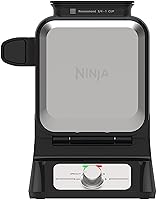
The Ninja makes Belgian waffles in a vertical design. Its 5 shade settings let you select a setting from softer to crispier, and it has a specialty setting for high-sugar batters such as brownie and cake mix.
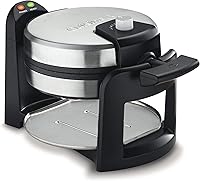
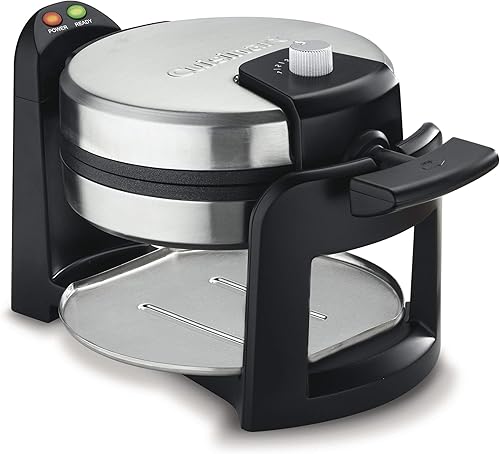
The Cuisinart is also a Belgian waffle maker, with a 180° rotary handle that flips the iron after you pour. It has 5 browning settings and a removable stainless steel drip tray.
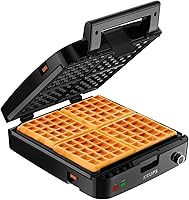
The Breville makes a classic circular waffle and has 7 browning settings. Its moat is designed to help contain batter that spills over the cooking plates.
What does a flip waffle iron do?
A flip waffle iron rotates the cooking unit after you pour the batter. The Cuisinart's 180° handle turns the whole iron over, moving batter through the plates as it cooks.
A rotating design takes extra room and adds a step to your routine. Make sure you have space to rotate the handle without hitting a wall, cabinet or nearby item.
A fixed model skips that movement. The Ninja uses a vertical design, while the Breville has a traditional flat countertop form.
Flipping is a feature, not a definition of a waffle iron. For more on the design, see why Belgian waffle makers flip.
Which features should you compare before choosing?
Compare the features that change your routine: waffle style, controls, batter handling and cleanup. The right combination depends on how you cook and where you'll store the appliance.
- Plate style: Choose Belgian plates for deeper waffles or classic plates for thinner, round ones.
- Browning controls: The Ninja and Cuisinart each have 5 settings; the Breville has 7.
- Batter handling: The Ninja includes a precision-pour cup. The Breville has a moat, while the Cuisinart includes a measuring cup and removable drip tray.
- Shape and storage: The Ninja's vertical design differs from the Cuisinart's rotating style and the Breville's classic form.
- Capacity: Each of these models makes one waffle at a time.
Controls provide choices, but they don't tell you which setting will suit your recipe. Try the appliance's guidance with your own batter and adjust to the result you prefer.
Cleanup depends on the design and the care instructions. The Cuisinart's drip tray is dishwasher safe, and its ceramic nonstick plates can be wiped with a damp cloth once cool.
Follow each model's manual for cleaning and storage.
If batter sticks, the cooking surface, seasoning or cleaning method may be part of the problem. Our guide explains why waffles stick to a waffle maker.
Which one should you choose?
Choose by the waffle you want and the feature you'll use most. The names “maker” and “iron” don't settle the choice.
Pick the Ninja if you want a vertical Belgian waffle maker with 5 shade settings and a specialty setting for high-sugar batters. Pick the Cuisinart if you prefer a rotating Belgian iron with a removable drip tray.
Choose the Breville for a classic circular waffle, 7 browning settings and a moat designed to contain spills. If you want to compare more shapes and sizes before deciding, start with our waffle maker guide.
Frequently asked questions
Are waffle makers and waffle irons the same thing?
Usually, yes. Both names commonly refer to an appliance with heated plates that cook batter into a waffle pattern.
Check the model's plate style and features, since names alone don't tell you whether it makes a thin classic waffle, a deep Belgian waffle or a rotating waffle.
Is a Belgian waffle iron different from a regular waffle iron?
The main difference is the waffle each one makes. Belgian-style plates have deeper pockets for a thicker waffle, while regular or classic plates make a thinner waffle.
Recipes and batter also affect the result, so choose the plate style that suits the waffles you like.
Does a waffle iron have to flip?
No. Some waffle makers cook with fixed plates, while flip models rotate the cooking unit after you pour batter.
A flip design is one feature to consider, not a requirement for making waffles.
Check how much counter space the rotating handle needs.
What matters more, the name or the plates?
The plates matter more because they determine the waffle's shape and depth. Compare plate style, waffle thickness, capacity and browning controls.
A product called a waffle maker can be a Belgian model, and one called a waffle iron can make classic round waffles.